Refresher: The GDPR's Six Legal Bases for Data Processing
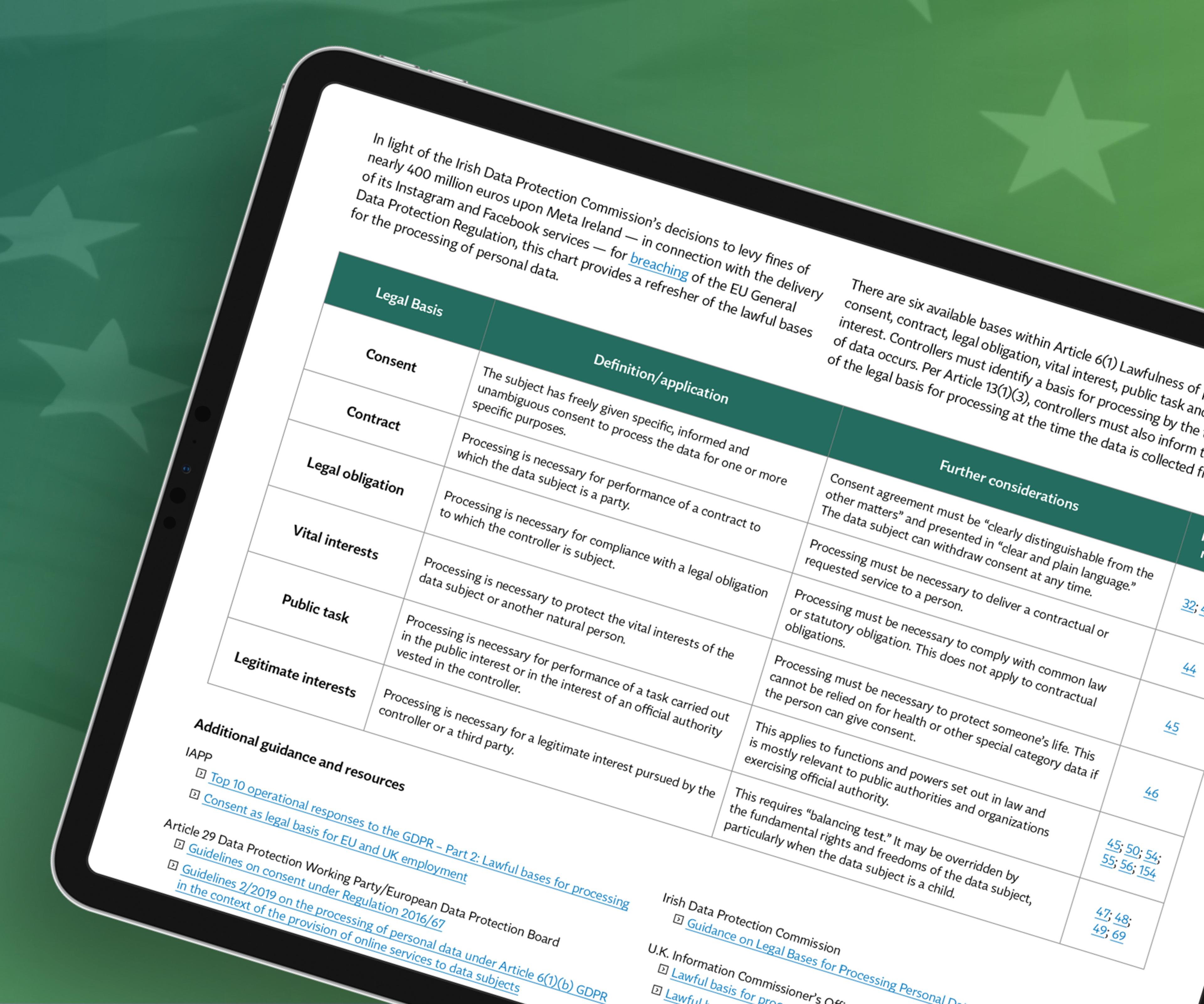
This resource provides a refresher on the six bases for lawful processing under Article 6 of the EU General Data Protection Regulation.
Contributors:
Müge Fazlioglu
CIPP/E, CIPP/US
Principal Researcher, Privacy Law and Policy
IAPP
This resource provides a refresher on the six bases for lawful processing under Article 6 of the EU General Data Protection Regulation. Given the fines levied in January 2023 by the Irish Data Protection Commission against Meta Ireland, this resource explains the scope of the Article 6 lawful bases for processing, further considerations for determining when each applies, relevant recitals, additional IAPP guidance and resources from supervisory authorities.
There are six available bases within Article 6(1) Lawfulness of processing: consent, contract, legal obligation, vital interest, public task and legitimate interest. Controllers must identify a basis for processing by the time collection of data occurs. Per Article 13(1)(3), controllers must also inform the data subject of the legal basis for processing at the time the data is collected from them.
Legal basis: Consent
Definition/Application
The subject has freely given specific, informed and unambiguous consent to process the data for one or more specific purposes.
Further considerations
Consent agreement must be “clearly distinguishable from the other matters” and presented in “clear and plain language.” The data subject can withdraw consent at any time.
Legal basis: Contract
Definition/Application
Processing is necessary for performance of a contract to which the data subject is a party.
Further considerations
Processing must be necessary to deliver a contractual or requested service to a person.
Relevant recitals: 44
Legal basis: Legal obligation
Definition/Application
Processing is necessary for compliance with a legal obligation to which the controller is subject.
Further considerations
Processing must be necessary to comply with common law or statutory obligation. This does not apply to contractual obligations.
Relevant recitals: 45
Legal basis: Vital interests
Definition/Application
Processing is necessary to protect the vital interests of the data subject or another natural person.
Contributors:
Müge Fazlioglu
CIPP/E, CIPP/US
Principal Researcher, Privacy Law and Policy
IAPP