The global implications of the White House's export controls on Anthropic
Last Friday, the White House imposed sweeping export controls over Anthropic's newly released Fable 5 and Mythos 5 AI systems. The move prompted the company to abruptly disable the systems, sending ripples across the globe as G7 nations meet in Geneva.
Contributors:
Jedidiah Bracy
Editorial Director
IAPP
On 12 June, the Trump administration issued an export control directive to suspend all access by any foreign national to Anthropic's newly released Fable 5 and Mythos 5 artificial intelligence systems, citing national security concerns. The directive pertained to any foreign national inside or outside the U.S., including Anthropic employees who are foreign nationals. The move set off a firestorm for the company over the weekend and has led to swift reactions from policy makers in the European Union and among cybersecurity executives and experts.
In response to the White House directive, Anthropic disabled both systems to all of its customers "to ensure compliance." According to a company blog post, the directive did not "provide specific details of its national security concern," but according to news reports, the White House was concerned about the potential to "jailbreak" the powerful new systems, effectively allowing adversaries to circumvent Anthropic's safety controls.
Though Anthropic complied with the order, the developer believes the White House decision was based on "one potential jailbreak" that was shared with the government by Amazon CEO Andy Jassy, according to The Wall Street Journal. Amazon is an investor in Anthropic.
"We disagree that the finding of a narrow potential jailbreak should be cause of recalling a commercial model deployed to hundreds of millions of people," Anthropic stated. "If this standard was applied across the industry, we believe it would essentially halt all new model deployments for all frontier model providers." Anthropic also said other LLMs with fewer technical capabilities could perform similar functions as the White House is criticizing.
Over the weekend, the company sent technical staff to Washington to help resolve the issue.
Politico reported on the "whirlwind 24 hours" that led to the White House directive, including a series of tense calls between both parties, which included Anthropic CEO Dario Amodei and National Cyber Director Sean Cairncross, Treasury Secretary Scott Bessent and Commerce Secretary Howard Lutnick, among others. Officials were reportedly "unmoved by Amodei's arguments" as they felt they had "proof" that Amazon's findings were enough to raise national security concerns.
"Export controls were a last resort after begging them for hours to work with us," a senior White House official told Politico. "This was not something we wanted to do, but our hands were tied."
Former White House AI "czar" David Sacks supported the move by the Trump administration, saying "The Admin values Anthropic's technical capabilities and feels that this issue, while serious, should be easily resolved. The ball is in Anthropic's court."
Cybersecurity professionals react
In an open letter to Lutnick and Cairncross, a group of nearly 80 cybersecurity executives and experts asked the White House to lift the restrictions and "commit to an open, scientific and transparent process of handling AI risk assessments in the future."
The letter highlights the "significant impacts" AI is having on cybersecurity, including by greatly reducing the difficulty of finding flaws in software and writing exploits for those flaws." They note that Anthropic's models "are quite good at finding flaws," but they're "not uniquely good," as several other models are used for "security audits and red-teaming every day."
They suggest that Chinese open-weight models "are only months behind the best American models," and pulling "the best capabilities away from defenders without a good reason when our adversaries are rapidly advancing is dangerous."
"As a result, this action has taken the best models away from defenders, created market uncertainty, and risked America's AI leadership without any real risk to justify it," they wrote.
Suresh Venkatasubramanian, who cowrote the Biden administration's Blueprint for an AI Bill of Rights, shared his thoughts on the development and how he thinks AI policy should be implemented.
Venkatasubramanian said policymakers should "regulate the downstream risks and harms that come from the introduction of AI" and take a sector-specific approach to regulation. There should be a focus on the ecosystem of actors and safeguards that are in place instead of a focus purely on the technology, and "to really assess the risks associated" with AI. He said "independent testing" is needed, not just the AI companies' blog posts on their testing.The 'kill switch' and calls for more tech sovereignty
In response to the order, several European politicians reacted, bolstering calls for more sovereign AI systems in the continent.
Bruno Retaillau, a former French interior minister and 2027 presidential candidate, said it "should serve as a wake-up call" and that "a nation that depends on others for its technology is a nation that can be unplugged overnight."
British MP and former minister for the armed forces Al Carns said, "This week the most advanced AI model on the planet got switched off by a foreign government. British researchers were studying it. British companies were testing it. British hospitals were piloting it. Not any more."
A recent article by Wired revealed how dozens of governments, companies and organizations in Europe are moving or planning to move from U.S. Big Tech companies over concerns of the "kill switch."
Earlier this month, the European Commission proposed the European Technological Sovereignty Package, which includes a set of measures to strengthen the bloc's capacity in semiconductors, AI, cloud and open source. Commission President Ursula von der Leyen said, "We cannot afford to depend on others for the technologies that keep our hospitals running, our energy grids stable and our services secure."
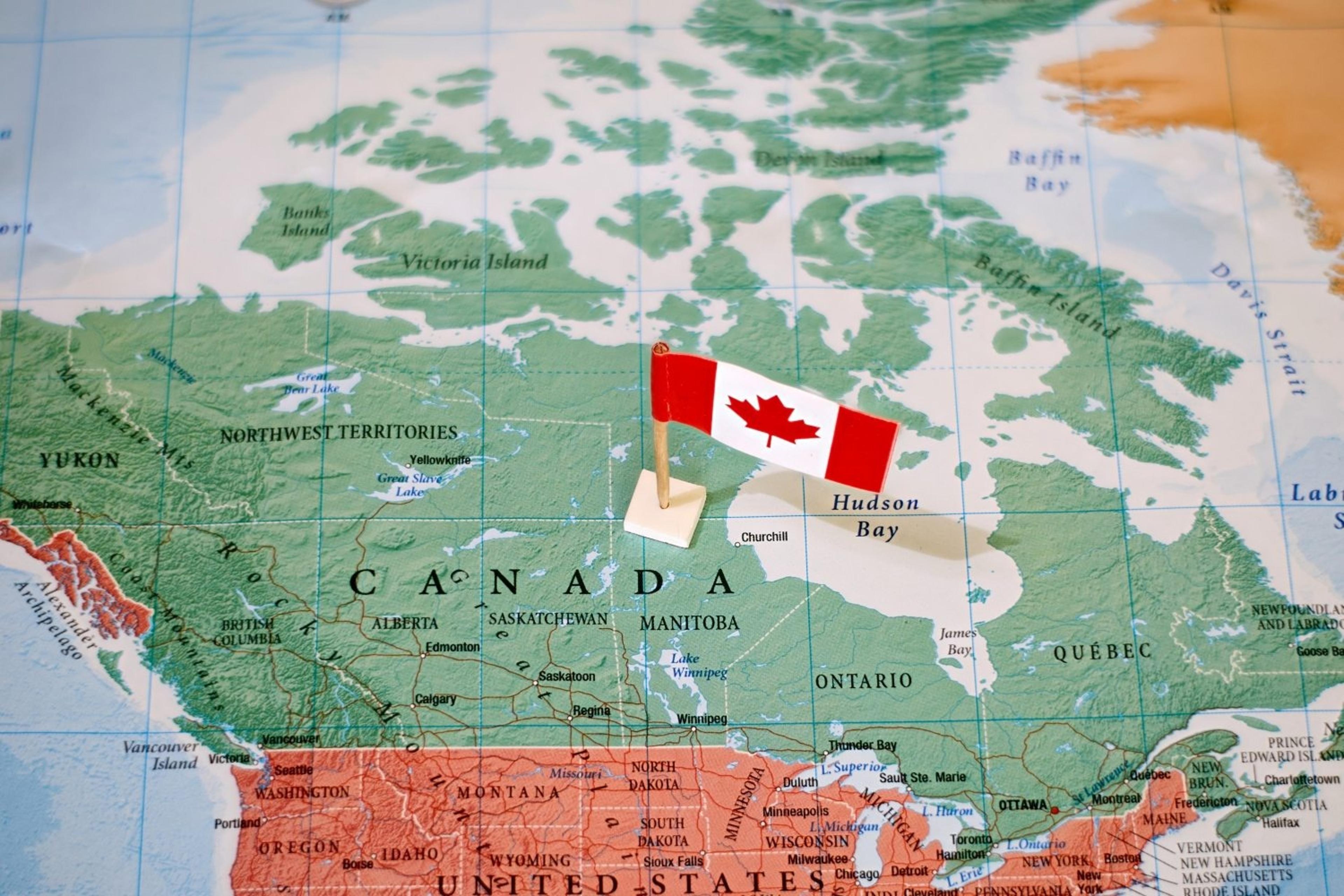
Last week, Canada also released its National Artificial Intelligence Strategy: AI for All, which stated, "We will strengthen Canadian sovereignty at a time when it is being deeply challenged. ... We will build resilience with new alliances among like-minded countries to ensure that Canadians have choices in the AI tools they use."
The White House move also comes as G7 leaders, including U.S. President Donald Trump, head to the French Alps this week to discuss the ongoing wars in Iran and Ukraine. Tech Policy Press Contributing Editor Mark Scott wrote that "simmering just under the surface during the upcoming G7 Summit ... are growing tensions about artificial intelligence."
AI and fracturing politics in the U.S.
In his second term, President Trump and his administration have taken a mostly hands-off approach to AI regulation, going so far as signing several executive orders on AI. They have pushed back against state-level AI regulation, calling for an acceleration of infrastructure and emphasized competition.
Its most recent EO on "Promoting Advanced Artificial Intelligence Innovation and Security," calls on leading AI companies to share advanced "frontier models" with the government for a cybersecurity review. Anthropic worked with the federal government and shared their latest models with key organizations prior to the release of Mythos.
However, several Republican lawmakers are starting to push back against the administration's laissez-faire approach to AI regulation. Sen. Josh Hawley, R-Mo., "delivered a blistering rebuke of unfettered AI development" in a recent speech, and Florida Gov. Ron DeSantis argued against federal efforts to preempt state AI regulation, suggesting it is "bad policy."
Earlier this month, House lawmakers led by Reps. Jay Obernolte, R-Calif., and Lori Trahan, D-Mass., released a discussion draft, called the Great American AI Act.
The IAPP's Cobun Zweifel-Keegan recently offered a detailed analysis of the bill and the White House's pivot on some AI regulation, writing, "It is rumored that the White House and Obernolte have worked together to think through the priorities that would be reflected in this bill, though it has been unclear the extent to which the effort is coordinated, or which version of the administration's priorities might be reflected."
Geopolitical risk and other considerations
Amid a fractured U.S. regulatory landscape and increased calls for tech sovereignty by several nations around the world, risk is on the rise.
Baker McKenzie Partner Brian Hengesbaugh, who writes a regular column for the IAPP, said the incident is the latest "iteration of how geopolitical risk impacts multinational companies" and that there are trends pointing toward growing geopolitical risk.
To mitigate potential risk, Hengesbaugh said, "As a novel thread in business continuity planning, companies should start to incorporate potential unavailability of AI models into company workflows."
Among other recommendations, he also said it is important to "be prepared for more volatility."

This content is eligible for Continuing Professional Education credits. Please self-submit according to CPE policy guidelines.
Submit for CPEsContributors:
Jedidiah Bracy
Editorial Director
IAPP
Tags: