Privacy Engineering Domains
This series provides an overview of some privacy engineering domains, highlighting key responsibilities, skills and organizational governance.
Privacy engineering is a critically important discipline in the privacy community. It involves applying systematic, scientific or methodological approaches to include privacy requirements in the design, development and operations of systems and services in various domains, including software development, system design, data science, physical architecture, process design, information technology infrastructure and human-computer interaction/user experience design.
These resources are intended to facilitate a deeper understanding of and collaboration within the increasingly important field of privacy engineering.
Series Overview
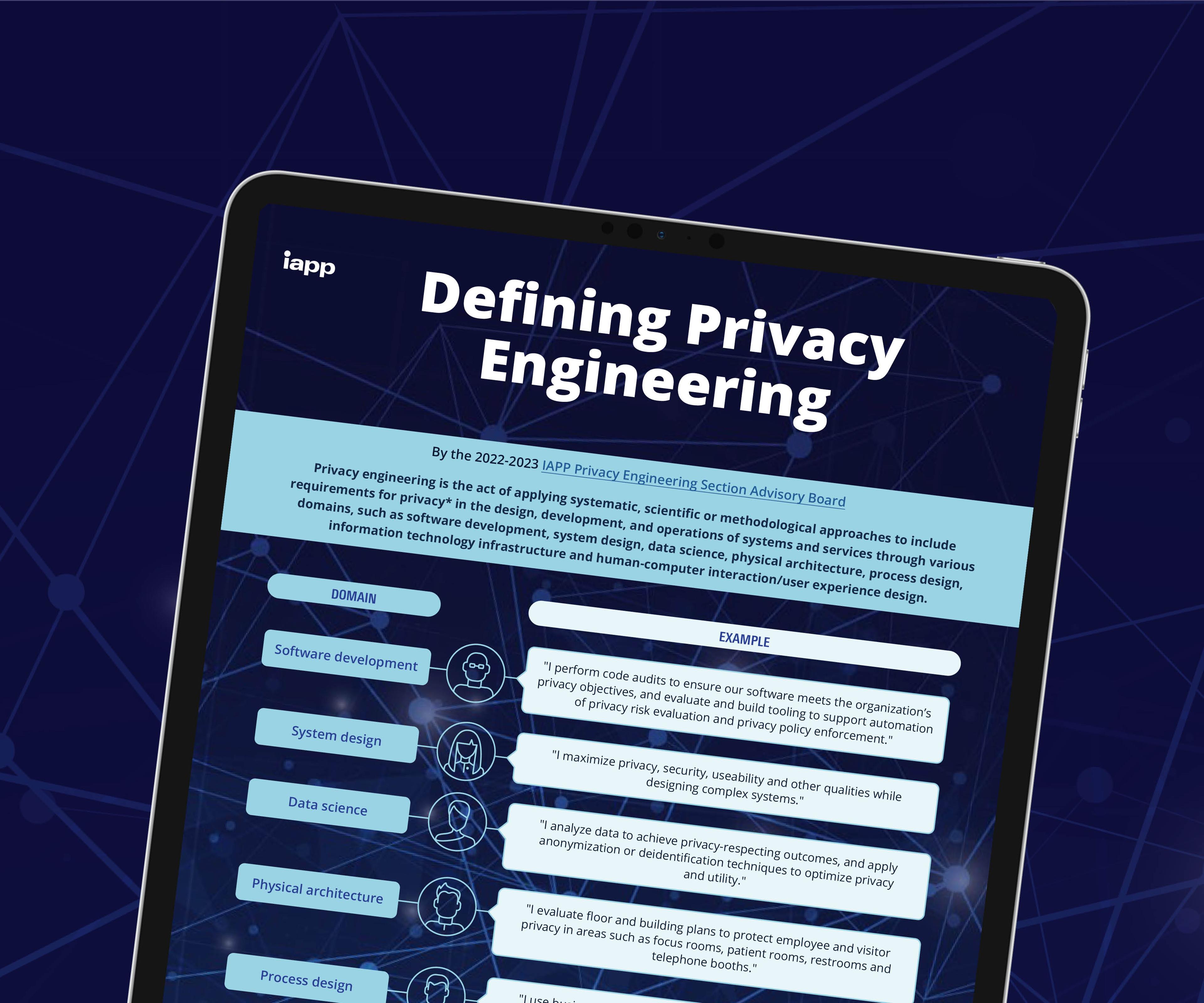
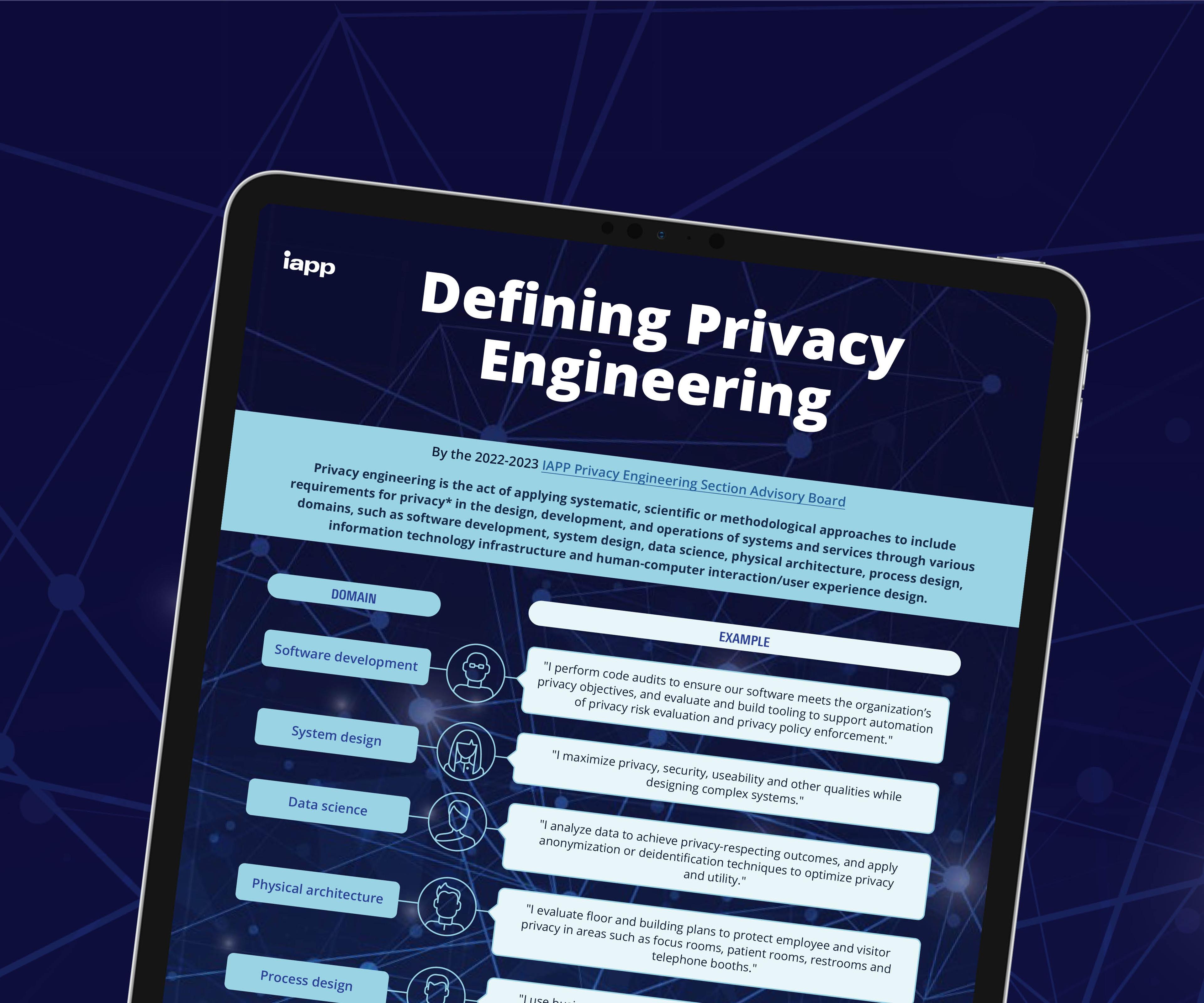
Defining privacy engineering
This resource provides a broad definition of privacy engineering and highlights various domains in which privacy engineers can significantly impact the protection of privacy.
View resource
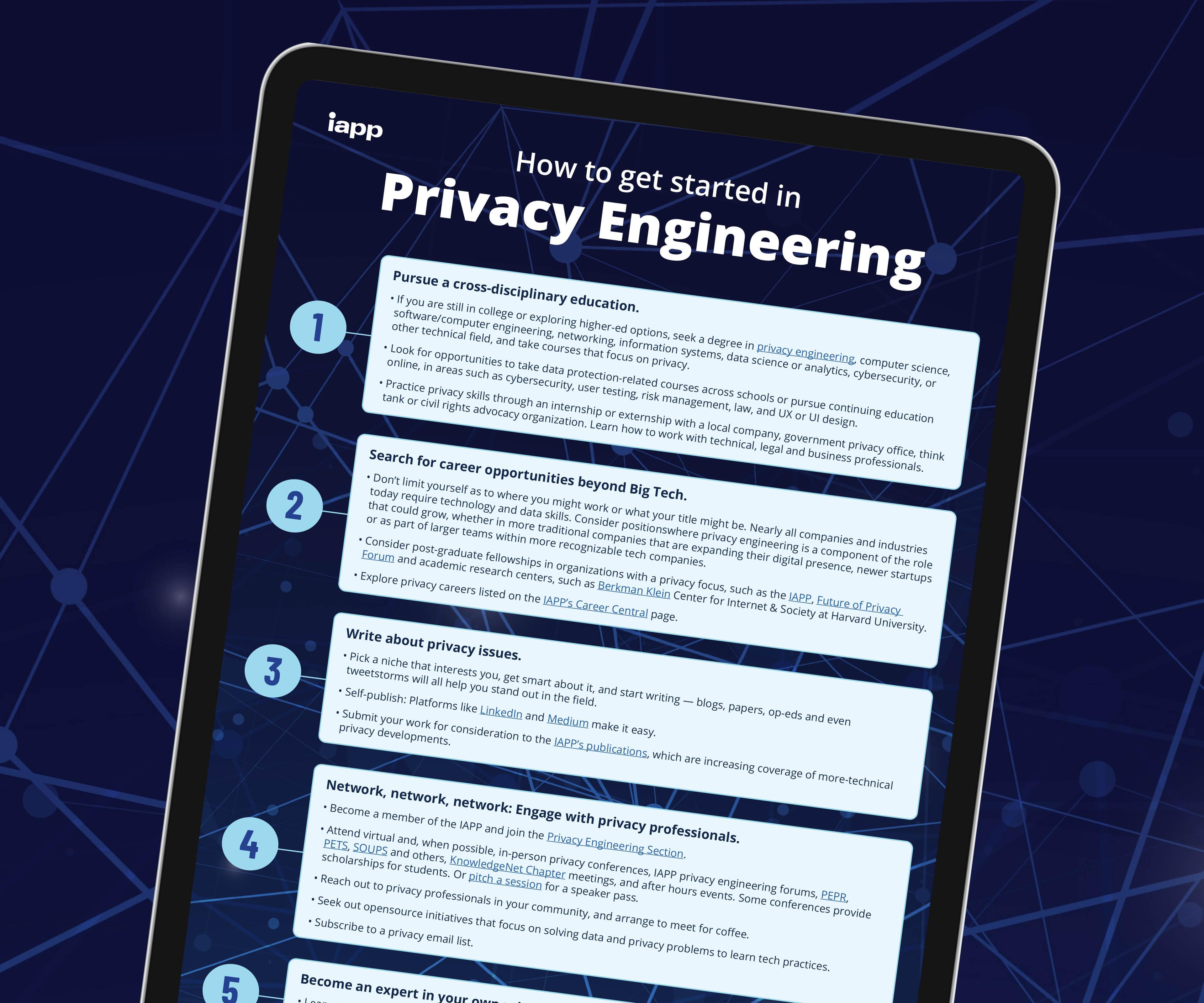
How to get started in privacy engineering
This resource offers advice on how to jump start a career in privacy engineering. It offers tips for pursuing a cross-disciplinary education, searching for career opportunities beyond Big Tech, writing about privacy issues, networking with other professionals, earning privacy credentials, staying informed about privacy issues, and finding a niche.
View resource
IT infrastructure architect
This resource focuses on IT infrastructure architects, whose responsibilities include developing IT infrastructure to ensure data flows between systems have data-use controls in place.
View resource
Software developer/engineer
This resource focuses on software developers and engineers, who assist in ensuring software meets organizational compliance requirements and security objectives.
View resource
Data scientists
This resource focuses on data scientists, whose role includes turning data into valuable insights while maintaining strong privacy practices.
View resource
UX Designer
This resource focuses on UX designers in the privacy engineering domain, whose role includes creating user experiences that are intuitive, accessible, empowering, and privacy-compliant.
View resource
Physical Architect
This resource focuses on physical architects, whose role includes designing and managing physical spaces, ensuring that privacy is considered in every aspect of the environment.
View resource
Process Design
Coming Soon
System Design
Coming Soon

This content is eligible for Continuing Professional Education credits. Please self-submit according to CPE policy guidelines.
Submit for CPEs