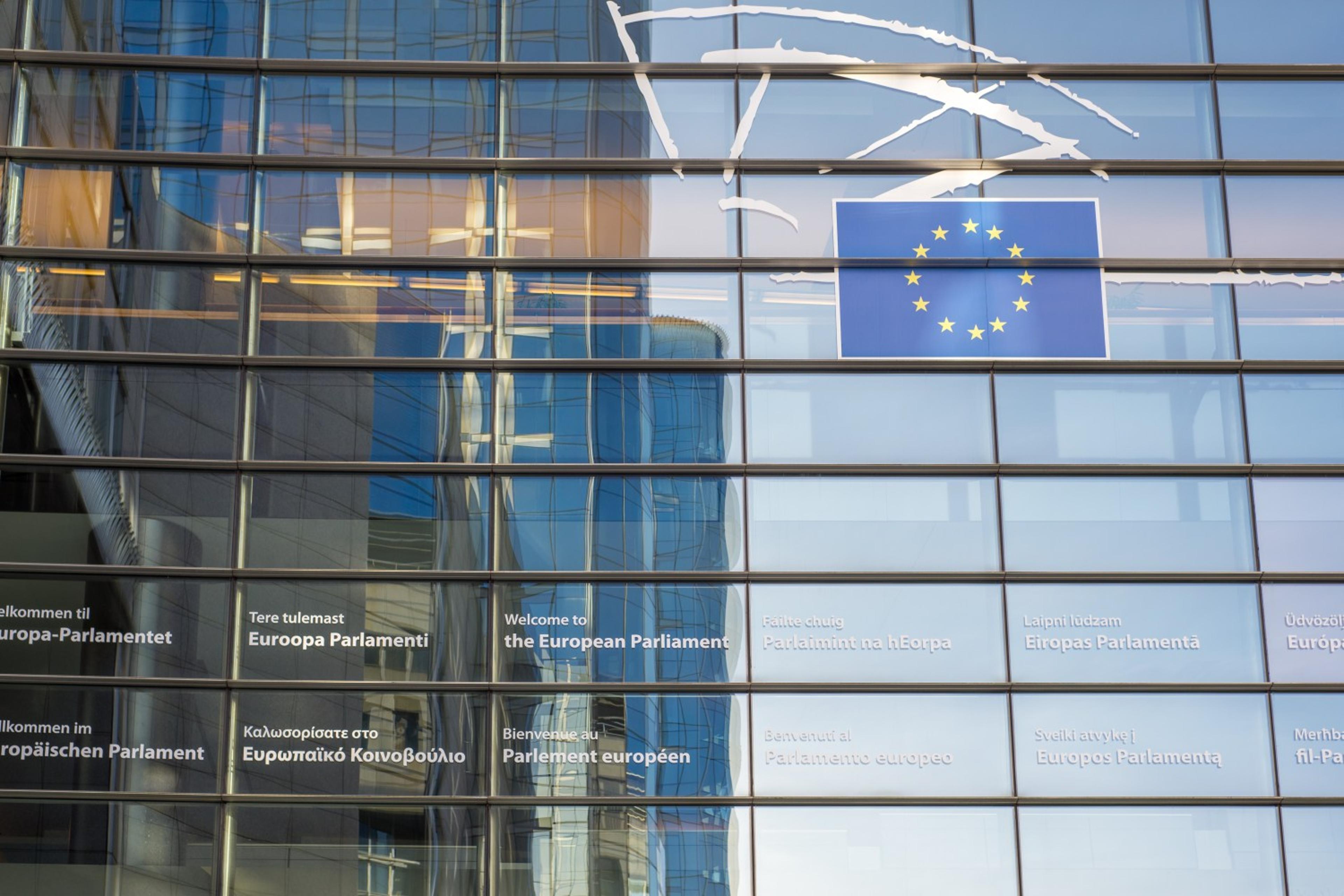
MEPs question Anthropic's EU standing, discuss digital sovereignty

Anthropic appeared before the European Parliament Committee on the Internal Market and Consumer Protection to discuss U.S. control over access to frontier AI models and potential impacts to EU sovereignty initiatives.
Contributors:
Lexie White
Staff Writer
IAPP
Artificial intelligence innovation and digital sovereignty are top of mind for the EU, evidenced by the recent amendments to the AI Act and additional proposed regulations aimed at raising the bloc's AI profile.
The European Parliament Committee on the Internal Market and Consumer Protection's 14 July hearing featuring Anthropic captured the balance the EU is still seeking to strike between innovation and safety. MEPs pressed Anthropic Technical Staff Member Donny Greenberg on a range of topics, including the security of its company's AI products following the recent U.S. decision to drop restrictions on frontier models
The U.S. temporarily restricted access to several of Anthropic's frontier AI models in June before the Department of Commerce recently lifted restrictions requiring Anthropic to block foreign nationals from its Claude Mythos and Fable AI models after the company worked to address the government's concerns.
The developments prompted MEPs to question Europe's reliance on AI systems developed outside of the bloc.
"The past month has made us all acutely aware that the technology we're creating is bringing with it additional geopolitical complexity," Greenberg said.
Dutch MEP Dirk Gotink said the U.S. decision to limit the use of Anthropic's frontier AI models emphasized "once again that maybe that partnership we have from a trans-Atlantic point of view is not as solid as we always expected it."
"But on a technological front, it is actually quite obvious now, the U.S. is leading AI, and the EU is trying to catch up," he added.
With lingering questions over the stability of the EU-U.S. Data Privacy Framework and concerns surrounding the U.S. influence on AI companies' international deployments, Greenberg said Anthropic will continue to cooperate "with the U.S. government in order to identify a sustainable framework that offers our customers and governments around the world predictably."
He noted Anthropic "also welcomes our cooperation and constructive conversations with the AI office, the European Commission, and the (European Union Agency for Cybersecurity) during these first of its kind moments in AI."
Greenberg joined the meeting in place of Anthropic Head of Public Policy Sarah Heck, who the IMCO originally requested to testify. The denial did not sit well with committee members, as Dutch MEP Kim van Sparrentak told Politico, "It's clear from this hearing Anthropic doesn't care about Europe."
AI cybersecurity efforts
Van Sparrentak highlighted concerns about frontier AI models' ability to identify and potentially exploit cybersecurity vulnerabilities, questioning how the company plans to prioritize keeping European users' data safe.
"What is Anthropic exactly doing to ensure people and businesses are safe, not only in the U.S. but also in Europe, and that the model doesn't fall into the wrong hands, and that this model won't be weaponized for geopolitical gain," she said.
Greenberg and MEPs agreed organizations must work to implement secure AI tools that can help strengthen innovation and cybersecurity standards. He highlighted Anthropic's Project Glasswing, which was created to help organizations identify system vulnerabilities and prevent cybersecurity threats.
The Glasswing initiative has expanded to approximately 150 organizations across more than 15 countries. Greenberg said participating organizations identified more than 10,000 vulnerabilities during the program's first month.
He warned that frontier AI capabilities are advancing rapidly across the industry, noting competing developers are expected to introduce models with similar cybersecurity capabilities within months. Anthropic's focus, according to Greenberg, is to continue to address "what we can do globally, especially as a cybersecurity field, to collectively prepare and collaborate for these capabilities."
Digital sovereignty
The EU AI Office will begin its enforcement of the AI Act 2 Aug., allowing regulators to evaluate whether frontier AI models deployed within the EU have established and adequate safeguards.
The European Commission recently launched its EU Action Plan on Cybersecurity and Artificial Intelligence, which aims to address AI models' cybersecurity capabilities and other concerns around the the evolving AI landscape. The plan contains similarities to the White House's executive order on AI innovation and security, which allows the government to evaluate AI models' safety before they are deployed.
European AI Office Director Lucilla Sioli said the plan "also provides a blueprint to organize access to the models, and that's going to be, I think, very important for the future and for the relationship also with the providers in terms of the choice of the trusted users."
Sioli noted the initiative is intended to strengthen Europe's cybersecurity efforts without creating a potential dependence on frontier AI models.
"It's not just a question of competition in tech," Sioli said. "It's also very much a question of technological sovereignty and security."
Greenberg highlighted EU digital sovereignty efforts, noting Anthropic has tracked the launch of the cybersecurity action plan alongside other global governments' sovereignty frameworks. In addition to collaboration with industry, he indicated cyber resilience in the AI era will hinge on "well-established best practices" and "novel experimentation."
"Coordinated, highly collaborative action across many organizations will be necessary," Greenberg added. "Frontier AI developers, software companies, security researchers, open-source maintainers, and governments are all essential to navigating this moment to secure our digital future."

This content is eligible for Continuing Professional Education credits. Please self-submit according to CPE policy guidelines.
Submit for CPEsContributors:
Lexie White
Staff Writer
IAPP
Tags: